BREED STANDARD
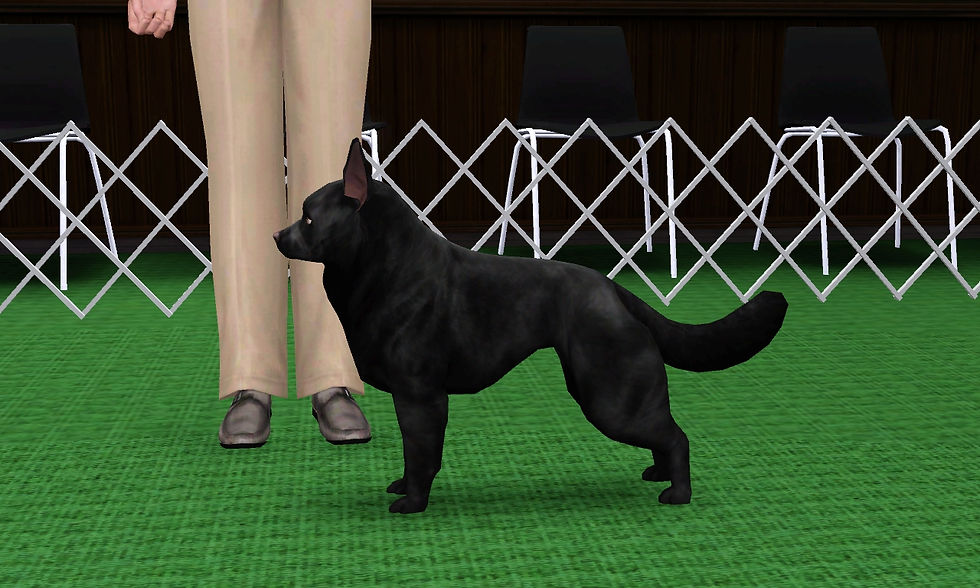


Non-Sporting Group
General Appearance
Small and light, the Cusquito has a foxy appearance, accentuaded by the large triangular ears. It is square in build with a lean figure, a small tapering muzzle, sloping topline and tucked-in belly. They display a naturally calm and quiet disposition. They come in three varieties: short or smooth, long and wire. Average height ranges between 36-40cm at the withers.
Temperament
By nature the Cusquito is quiet and calm inside the home. It rarely barks and only does so in warning of strangers or other animals. Outside, it is a very active dogs that, for its size, requires a lot of exersize. It's gaze is alert and lively and should not display fear. Its independent nature is sometimes mistaken with stubborness.
Head
The head is of mesocephalic proportions, with a small muzzle that tapers to a point. It is foxy in appearance with large triangular ears.If an imaginary line is traced from the occipital crest along the frontal bone it should almost be parallel to the line traced from the stop to the nose. The craneal region is divided from the facial region by a clearly defined stop. When viewed from the front the head is square and the placement of the eyes should be no further apart than the width of the muzzle. The cusquito has a moderately large nose that may range in color from black to liver to pink. Even black individuals may present a pink or liver nose. The eyes are almond-shaped and placed about halfway on the imaginary line that connects the tip of the nose to the base of the ears. Eyes color may range from light amber to dark brown, hazel, green and blue. The latter is associated mostly with individuals with the dilution gene.
Size, Proportion & Substance
The Cusquito is small and of a proportionate, light and square build. The length of the dog from the shoulder joint to the ischial tuberosity is the same as the height measured at the withers. They stand on average at 36-40cm at the withers and weigh about 8-12kg.
Neck, Topline & Body
The neck is strong, muscular and of moderate length. The topline slopes down from the shoulder is slightly inclined downwards as it follows the length of the back, finally sloping down gracefully at the base of the tail. The body is narrow with a deep chest that allows great room for the lungs, thus great breathing capacity. The tail is thick, low-set and relatively long.
Forequarters
They make up half the Cusquito's height at the elbows. They are lean but strong and the paws are small and cat-like. They may be covered by a dense layer of fur, specially in wire-coated individuals.
Hindquarters
The hindquarters are lean and muscular allowing for great force and drive. Over time the Cusquitos developed strong leg muscles that allowed to hold themselves up on the hind legs for extended periods when performing tricks.
Coat
Cusquito's coats come in three varieties: Short, Long and Wire. In short coated individuals the fur is about 1,5cm long, soft and dense, specially around the neck. Long coated individuals have longer and slicker coats, being specially tupid around the neck, chest, tail and with very slight feathering in the legs. Wire coated individuals have straight hairs and furnishings around the muzzle, brows, tail and legs. The coat is thinner and less dense.
Color
Accepted colors are black, red, fawn, liver, isabella, chocolate, blue, black and brindle or any of these in combination of and agouti/sable marking. Accepted colorations for the latter include black sable, red sable, liver sable, chocolate sable, isabella sable, blue sable and black sable on a brindle base. Bicolor cusquitos have a solid base color in combination with any other solid color in the muzzle, legs, chest and/or belly. The areas covered by the second color are larger than in tan point and the coloration is not always tan. Additional markings include white on the face, chest, neck, belly and legs, brindle points, tan points and masks.
This breed is characterized by having darker ears and a dark-tipped tail, a trait inherited from its wild ancestors.
Gait
The Cusquito's gait is soft, light and quiet, similar to that of a fox's. It is graceful, with determined strides. The tail is usually carried below the topline and on occasions above it but never acquiring a gay position.
Stack
In proper stack the Cusquito's knees be slightly behind the hip joints. The forequarters straight, the shoulder joint being level with the toes. "Over stacking", in which the shoulders pass beyond the toes forward, should be penalized. The dog's head should be straight and erected in an alert but calm manner, never hunching or shying away. Ideally, the length between the front and rear paws should exceed the dog's length (from shoulder joint to ischial tuberosity) in no more than 10% in stack.


